





























What to Look for When Buying a Fortnite Account: OG Skins, Rare Outfits and Account Value
Written by Rutaku Team 11-13 min read 33 views
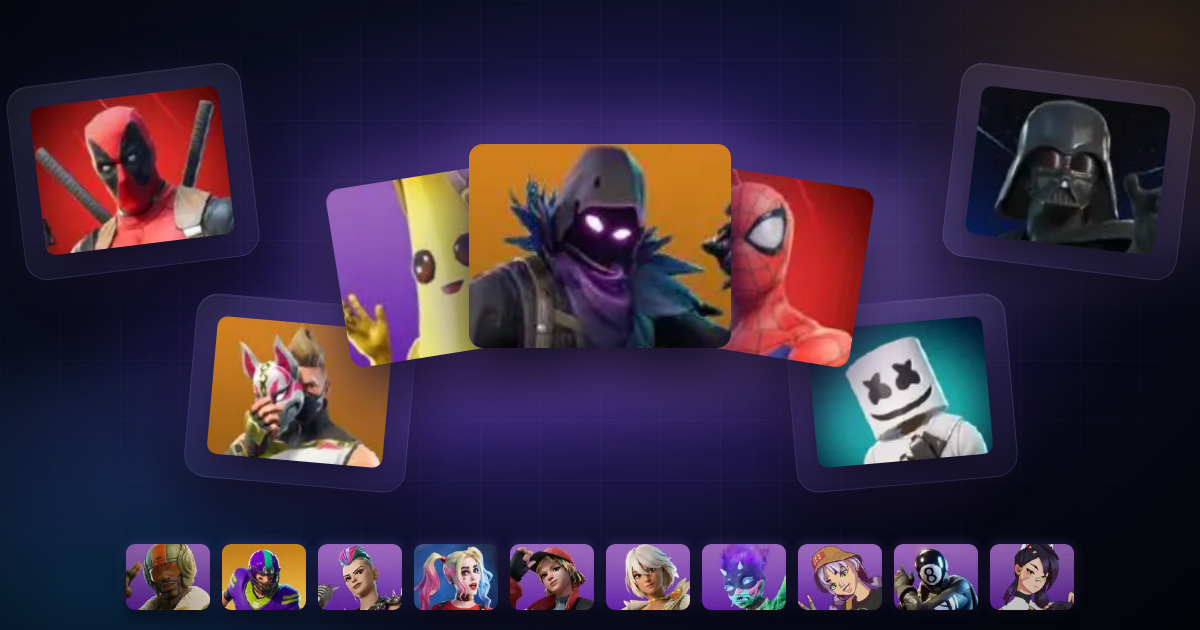
What makes a Fortnite account valuable: OG and promotional outfits, Battle Pass rewards from older seasons, pickaxes and emotes, account level, platform rules and Epic's terms, in one guide.
Fortnite has been free to play since 2017, yet players spend real money on it every season. The reason is the locker. Outfits, pickaxes, gliders and emotes do not make you stronger, but they show how long you have played, which seasons you were there for and which collaborations you caught in time. That is why a Fortnite account is often valued by what is in its locker rather than by its rank.
This guide explains what actually sets the value of a Fortnite account: OG outfits, Battle Pass rewards from earlier seasons, the rest of the cosmetic collection, account level, platform rules and Epic's own terms. At the end you will find where to browse Fortnite accounts on Rutaku and what to check before you pay.
Why are Fortnite accounts so popular?
Fortnite's economy is almost entirely cosmetic. You buy items with V-Bucks in the Item Shop or unlock them through passes, and most of them are only available for a limited time. The Shop rotates every day, a season lasts a few months, and once a season ends its Battle Pass ends with it.
That creates a simple problem for a player who joins late: some items can no longer be earned the normal way, and others may return one day, but nobody can say when. An existing account solves that problem in one step. Instead of waiting for the right Shop rotation, you get a locker that has already been built over several seasons.
The game itself keeps moving too. At the time of writing (November 2026), the Treasure Hunters season of Chapter 7 is running. It started on 1 November, and Epic has announced a Chapter 7 end event for 5 December (Fortnite news). Every new chapter adds items that will be "old" a year later, which is exactly how today's ordinary outfit becomes tomorrow's rare one.
Three groups of buyers come up again and again:
- Collectors who want specific OG outfits from the first seasons.
- Returning players who missed several seasons and want a locker that reflects the game's history.
- New players who simply want a varied collection at a lower cost than buying every item one by one.
Why do OG skins and rare outfits matter?
"OG" is not an official Epic label. Players use it for items from Fortnite's earliest days, roughly the first seasons of Chapter 1 in 2017 and 2018, when far fewer people were playing. An outfit from that period proves that the account has been around since then, and that is what collectors pay for.
What counts as an OG item?
The best-known examples come from Battle Royale's first seasons:
- Black Knight: the top reward of the Season 2 Battle Pass, unlocked at tier 70 in December 2017.
- Renegade Raider: a Season 1 outfit, sold in that season's shop only to players who had reached the required level.
- Skull Trooper and Ghoul Trooper: early Halloween outfits that many players still associate with the first year of the game.
Rarity is not permanent, though. Some early items have been offered again in later special seasons, often with conditions such as an XP requirement. An outfit that returns becomes less rare, and the value of an account that holds it can drop. When a listing calls an item "OG", check when that item first appeared and whether it has come back since.
Promotional and event outfits
A second group of rare items comes from promotions: outfits tied to a hardware purchase, a partner campaign or a one-off event. A well-known example is the outfit from Samsung's 2018 device promotion. These items were never sold in the regular Item Shop, so they show up mostly on older accounts.
Rare outfits are what move the price of an account the most. Ten ordinary Shop outfits can be worth less than one item from the right season.
Battle Pass skins and older season content
The Battle Pass is the main source of outfits that cannot simply be bought. You unlock its rewards by playing through the season, and when the season ends, the pass and its unclaimed rewards end too.
The rule changed in 2024
For years, Battle Pass items were exclusive: they did not come to the Item Shop. In August 2024 Epic changed this for future passes. Starting with Chapter 5 Season 4, items from a pass might be offered in the Shop 18 or more months after that pass expires. Outfits, back blings, pickaxes, emotes, wraps, loading screens and other item types are all covered, but Epic also says there is no guarantee that a given item will ever come to the Shop (Epic announcement).
This matters directly for account value:
- Battle Pass items from before Chapter 5 Season 4 are not covered by the new rule, so they have kept their old character.
- Battle Pass items from Chapter 5 Season 4 onwards may reach the Shop after at least 18 months. Their rarity can fall over time.
- Licensed characters from passes are among the items Epic says players might see in the Shop later, again with no guarantee.
When an account is advertised with "rare Battle Pass skins", ask which seasons they come from. A Chapter 1 pass outfit and a recent pass outfit do not carry the same long-term value.
Styles and progress
Many pass outfits have alternative styles that unlock with further progress. An account that finished a pass usually holds those styles as well. When an item later comes to the Shop, Epic says the number of alt styles included may vary, so a fully unlocked original can still be different from a later Shop copy.
Pickaxes, gliders and emote collections
Outfits get the attention, but the rest of the locker adds a lot of value, especially when items come from the same early seasons.
- Pickaxes (harvesting tools): every match starts with one in hand, so players see them all the time. Pickaxes from early passes and rare collaborations are often listed by name.
- Gliders: visible at the start of every Battle Royale match. Older gliders tell other players how long the account has been active.
- Emotes: dances and gestures. Some early emotes are as recognisable as OG outfits, and licensed music emotes are part of many collections.
- Back blings, wraps and contrails: they rarely set the price alone, but they complete sets and make a collection more attractive.
A good listing names the most valuable items one by one instead of giving only a total count. "200 skins" tells you about size; a list tells you about value. If the listing shows only a number, ask for screenshots of the locker before you decide.
Account level and season history
Fortnite tracks two kinds of level, and listings sometimes mix them up.
- Season level belongs to the current season and resets when a new season starts.
- Account level is the total of the levels earned across every season. Epic describes it as the combined levels gained across all seasons, and you can see it in the Career tab of the game.
Account level is a good indicator of how much the account has been played. It also matters for competitive play: Epic says most cash-prize tournaments require an account level of 350 or higher, while other tournaments require 50 or higher (Epic help). Some events have extra conditions on top of the level, so check the rules of the specific event as well.
Season history is the third piece. An account that owns items from many different seasons was played over several years, which usually goes together with older outfits. If a listing claims early seasons, the locker should show items from those seasons.
Fortnite accounts and platform compatibility
One of Fortnite's strengths is that items follow the Epic Games account, not the device.
- Items work on every linked platform. Epic's help centre states that all items are shared between the platforms linked to the same Epic Games account. An outfit bought on PlayStation can be used on PC, Xbox or mobile when those are linked to the same account (Epic help).
- V-Bucks are the exception. V-Bucks bought on Nintendo Switch are not shared with other platforms, and V-Bucks bought on other platforms are not shared with Switch. If a listing mentions a V-Bucks balance, ask which platform it was bought on.
- Console links belong to the seller. A PlayStation or Xbox account linked to the Epic account is the seller's console profile, not part of what you buy. Ask which platforms are linked and plan to connect your own.
Save the World and Founder accounts
Save the World, Fortnite's co-operative PvE mode, became free to play on 16 April 2026. It runs on PC, PlayStation, Xbox and Nintendo Switch 2, but not on the original Switch, phones or tablets. Players who bought Save the World before it went free are called Founders, and Epic says they still earn V-Bucks through daily quests, mission alerts and Storm Shield Defense missions, while free players earn X-Ray Tickets instead (Epic help).
So "Save the World included" no longer means much on its own, since everyone can play it. What still adds value is Founder status, because it keeps earning V-Bucks.
What determines the value of a Fortnite account?
The factors below work together. An account rarely scores high on all of them, so decide which ones matter to you before you compare prices.
| Factor | Why it matters | What to check in the listing |
|---|---|---|
| OG and promotional outfits | They come from early seasons or one-off campaigns and are hard to find | Item names, the season each item came from, whether it has returned since |
| Battle Pass items | Passes before Chapter 5 Season 4 are outside the 18-month Shop rule | Which seasons the pass items belong to, unlocked styles |
| Size of the locker | More outfits, pickaxes, gliders and emotes mean more variety | Locker screenshots, not just a total count |
| Account level | Shows how long the account has been played; 350+ matters for most cash cups | Account level from the Career tab |
| Access type | Full access lets you take over the email; non-full access is cheaper but gives login only | "FA" or "NFA" in the title, whether the original email is included |
| V-Bucks and Founder status | Usable currency; Founders keep earning V-Bucks in Save the World | V-Bucks platform (Switch or not), Founder status |
| Linked platforms | Linked console profiles belong to the seller | Which accounts are linked and how they will be removed |
Access type deserves its own note. On a full access (FA) account you receive the login together with the email that controls it, so you can change the email and password and secure the account yourself. A non-full access (NFA) account gives you the login for playing but not the email, which keeps the price low and the control limited. Random accounts sit in between: you choose a tier by minimum number of skins, and the exact outfits are a surprise.
Where to buy a Fortnite account? Rutaku
Rutaku is a marketplace for game accounts and digital goods, and its Fortnite page groups the offers into separate categories. When this article was written (November 2026), the picture looked like this:
| Category on Rutaku | What you get | Offers at the time of writing |
|---|---|---|
| Fortnite accounts | A specific account whose outfits are listed | Full access accounts, from $4.99 up to a 256-skin collection at $2,000 |
| Fortnite FA random accounts | A full access account with at least the chosen number of skins | Seven tiers, from "+1 skin" at $0.60 to "+200 skins" at $30 |
The account listings name what matters in the title: the number of outfits, headline items and whether the original email comes with it. The random account tiers suit buyers who want a large locker for little money and do not mind which outfits it holds. Rutaku also has a separate NFA category on the Fortnite page for login-only accounts, so check it when you are looking for the lowest price.
Before you buy, open the listing and compare it with the checklist in this guide. Does the title name the outfits you care about? Is it full access? Does the description say anything about V-Bucks or linked platforms? If something is unclear, Rutaku's live support can answer before you pay. On the seller trust scores page you can also review sellers' track records.
The best way to use these criteria is on real offers. Open the Fortnite account listings, pick two accounts with a similar price and compare their lockers item by item. The difference in price is usually explained by one or two outfits.
Frequently asked questions
Is buying a Fortnite account against Epic's rules?
Yes. Epic's Terms of Service (last updated 10 September 2026) say you may only use your own Epic Games account, and that you may not sell, gift or trade it or share its login details (Epic Games Terms of Service). Epic can act against accounts that break its terms. Take that risk into account when you decide.
What is the difference between FA and NFA accounts?
A full access (FA) account comes with the email that controls it, so you can change the email and password. A non-full access (NFA) account gives you only the login for playing. NFA accounts are cheaper, but the original owner keeps control of the email.
What does a "+50 skins" random account mean?
It is a full access account with at least 50 outfits. You do not choose the outfits; they are a surprise. Random tiers are a cheap way to get a large locker, but they are not the right choice if you want one specific OG outfit.
Will the outfits work on my PlayStation, Xbox or Switch?
Items follow the Epic Games account, so they can be used on any platform you link to it. The exception is purchased V-Bucks: V-Bucks bought on Nintendo Switch stay on Switch, and V-Bucks bought elsewhere are not available on Switch.
Can Battle Pass outfits come back to the Item Shop?
Items from passes starting with Chapter 5 Season 4 might come to the Shop 18 or more months after the pass ends, without any guarantee. Pass items from earlier seasons are not covered by that rule.
Is an OG outfit rare forever?
Not necessarily. Some early items have returned in later special seasons, sometimes with conditions. Check when an item first appeared and whether it has been offered again.
Can the original owner take the account back?
That risk exists with any account that changes hands. On a full access account, change the email and password right after delivery, turn on two-factor authentication with your own email or authenticator and remove linked platforms you do not own. These steps reduce the risk but cannot remove it.
Conclusion
The value of a Fortnite account is in its history. Which seasons do the outfits come from? Are there OG or promotional items that rarely appear? Are the Battle Pass rewards from before Chapter 5 Season 4? Is it full access, and what does the account level say about how much it was played? A listing that answers those questions clearly lets you decide knowing what you are getting. You need to know Epic's rules, and the risk they bring, just as clearly.
Now you know what to look for, so put it to work. Browse the Fortnite accounts on Rutaku to compare named lockers, or pick a Fortnite FA random account tier if you want a big collection on a small budget. If you are also curious about other games, our League of Legends account buying guide follows the same approach.